


In this 100% original article, discover what Hall Effect (HE) technology is in mechanical keyboards. We clearly explain what this term means, how a switch works, why some gamers and content creators prefer it, and how to communicate effectively with your community.
1. What is the "Hall Effect" in a keyboard?
A Hall Effect keyboard contains a small magnet in the switch stem for each key, detected by a Hall effect sensor on the circuit board . When you press a key, the sensor measures the changes in the magnetic field to determine the key's position, without any mechanical contact or electrical rebound. This approach is called contactless detection.

2. How does a Hall Effect switch work?
- The switch contains a magnet that moves vertically with the key. The Hall sensor registers this movement as an electrical voltage.
- This signal is continuous, which allows for analog detection of the impact depth — for example between 0.1 mm and 4.0 mm depending on the material.
- Activation points can be programmed to the nearest tenth of a millimeter , which opens up uses such as joystick-style behavior for certain games.
3. The main advantages of HE keyboards
- Exceptional durability : these switches typically withstand over 100 million keystrokes, thanks to the absence of mechanical wear caused by metal-to-metal contact.
- Ultra-precise detection : no bounce or random double-press, each stroke is smooth and stable over time.
- Analog depth control : ideal for fine-tuning control sensitivity in games or creative workflows.
- Reduced latency : in "Rapid Trigger" mode, a keystroke can be registered from 0.1 mm of movement, which speeds up silent or repeated inputs.
4. Things to keep in mind
- Higher cost : manufacturing includes sensors, micromagnets, more complex firmware; the price generally remains in a range of over €100 to €300.
- More limited choice : few manufacturers still work with Hall Effect switches. Wooting, Keychron , Lemokey or SteelSeries are among the few to offer them.
- Sensitivity to external magnetic fields or temperature, which could slightly influence accuracy under extreme conditions.
- Linear tactile feedback : most Hall Effect switches are linear and do not offer intermediate "bump" or "click" feedback like some mechanical models.
5. Iconic examples of HE keyboards
- Wooting Two HE : full-size keyboard with continuous detection from 0.1 to 4.0 mm.
- Keychron K4 HE : 96% production/creation-oriented version with variable actuation.
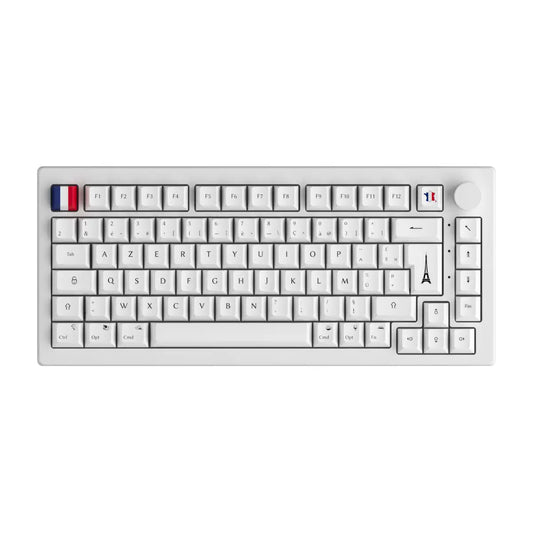
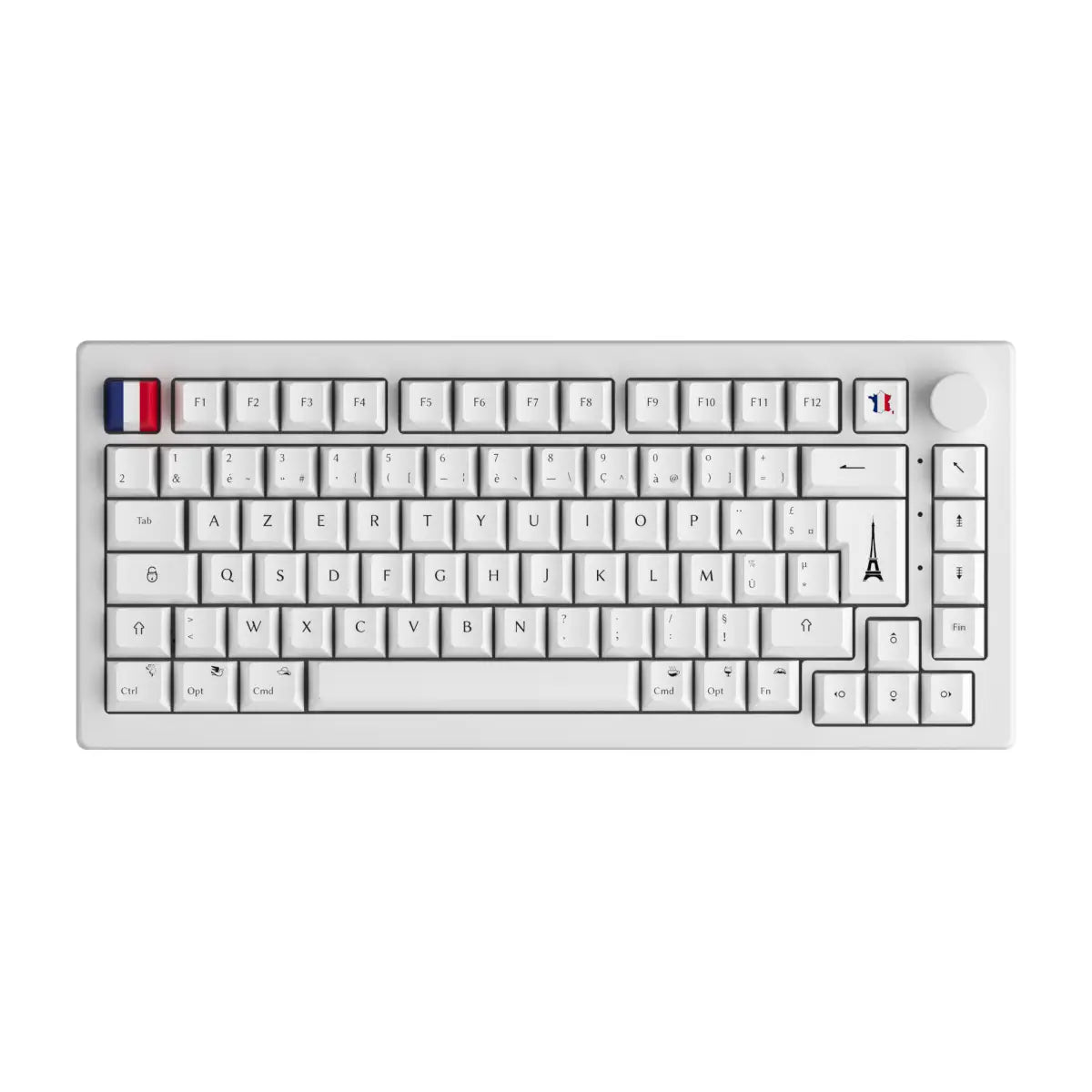
- Lemokey P1 HE : 75% compact format designed for gaming and responsiveness.
6. SEO & communication tips for your community
Keywords to naturally repeat in your content:
- Hall Effect keyboard
- switch Hall Effect
- mechanical analog keyboard
- adjustable actuation 0.1 mm
- Contactless magnetic detection
Highlight the benefits: extreme durability , precision , analog profile , with a language oriented towards performance, fluidity and innovation.
7. Quick FAQ
- Can all Hall Effect keyboards change the activation point?
- No, it depends on the keyboard's firmware. Some models offer this feature, others don't.
- Are Hall Effect keyboards suitable for office or creative use?
- Yes: typing remains fluid and often silent, but without marked tactile feedback.
Conclusion
In short, HE stands for Hall Effect —it's amagnetic and analog switch technology that uses Hall sensors under each key. Its strengths: unparalleled durability , ultra-precise detection , and a smoother feel than a traditional mechanical keyboard. Its limitations: higher price , still limited selection , and a sometimes linear feel.